
Pokémon card conditions and grading explained
Two copies of the same Pokémon card can look very different, and condition is one of the biggest factors in what a card is worth to a collector. Here's how card conditions work, what professional grading adds, and what to check before you buy a single.
What collectors look at
- Centring: are the borders even on all four sides?
- Corners: sharp and square, or soft, rounded or bent?
- Edges: clean, or with white wear ("whitening") or chips?
- Surface: scratches, print lines, dents, stains or creases, especially on holo areas.
Raw condition labels
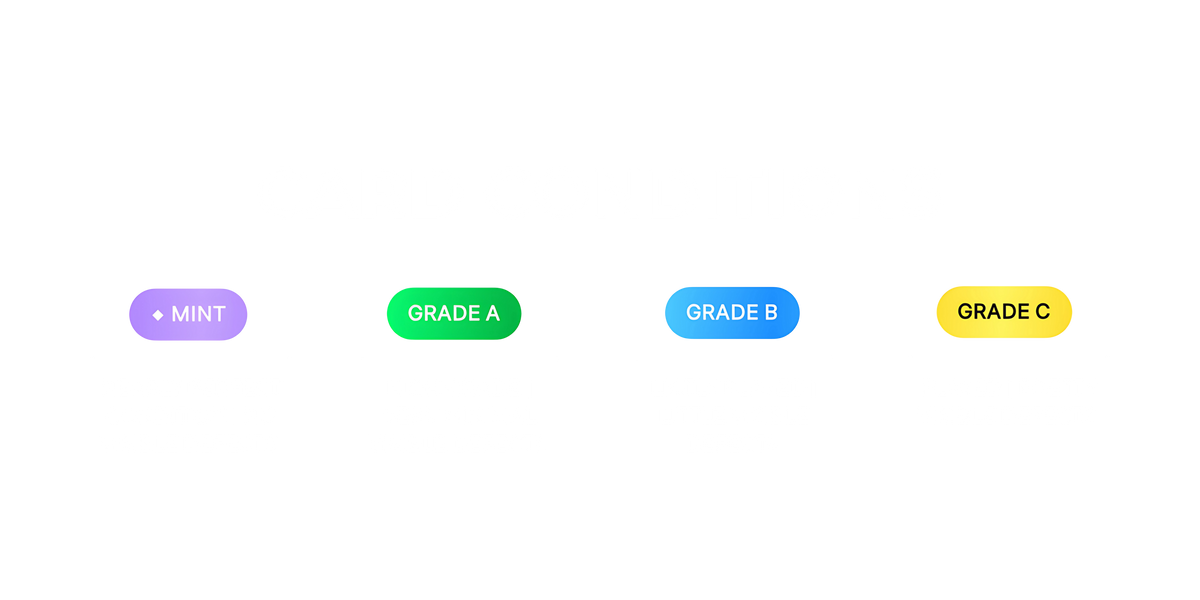
Shops describe ungraded ("raw") cards with labels such as Mint, Near Mint, Excellent, Played and Poor. Every shop defines its labels a little differently, so always read the seller's definitions and look at the photos. At LUXEMBOURG TCG we use four grades:
- Mint: a perfect card.
- Grade A: minor damage.
- Grade B: visible damage.
- Grade C: played, with clearly visible damage.
Professional grading
Companies such as PSA, BGS (Beckett) and CGC examine a card, give it a numeric grade (usually on a 1–10 scale) and seal it in a tamper-evident case called a slab. Grading confirms authenticity and condition, and protects the card, but it costs money and takes time, so it's usually worth it only for valuable or sentimental cards.
How to protect your cards
Use penny sleeves and top loaders or a quality binder, keep cards away from sunlight and humidity, and handle holos by the edges.
Browse our singles and graded cards in The Card Shop.
FAQ
What condition grades does LUXEMBOURG TCG use?
Four grades: MINT (a perfect card), Grade A (minor damage), Grade B (visible damage) and Grade C (played, with clearly visible damage).
What do collectors check on a card?
Centring, corners, edges and surface, including scratches, print lines, dents, stains or creases, especially on holo areas.
Is professional grading worth it?
Grading by companies such as PSA, BGS (Beckett) or CGC confirms authenticity and condition and protects the card, but it costs money and takes time, so it's usually worth it only for valuable or sentimental cards.
How should I protect my cards?
Use penny sleeves and top loaders or a quality binder, keep cards away from sunlight and humidity, and handle holos by the edges.
Never miss a release
New sets, pre-orders and restocks – straight to your inbox.


